
Interior and Exterior Renders: The Complete Guide for Real Estate Projects
Last updated: August 17, 2026
The difference between interior and exterior renders, when to use each, how many renders a project really needs, and how to spot a render that actually sells apartments.

Every real estate project starts at the same point: there is nothing to show yet. No show apartment, no lobby, no view from the balcony — just drawings. Interior and exterior renders turn those drawings into something a buyer can see, understand and fall in love with.
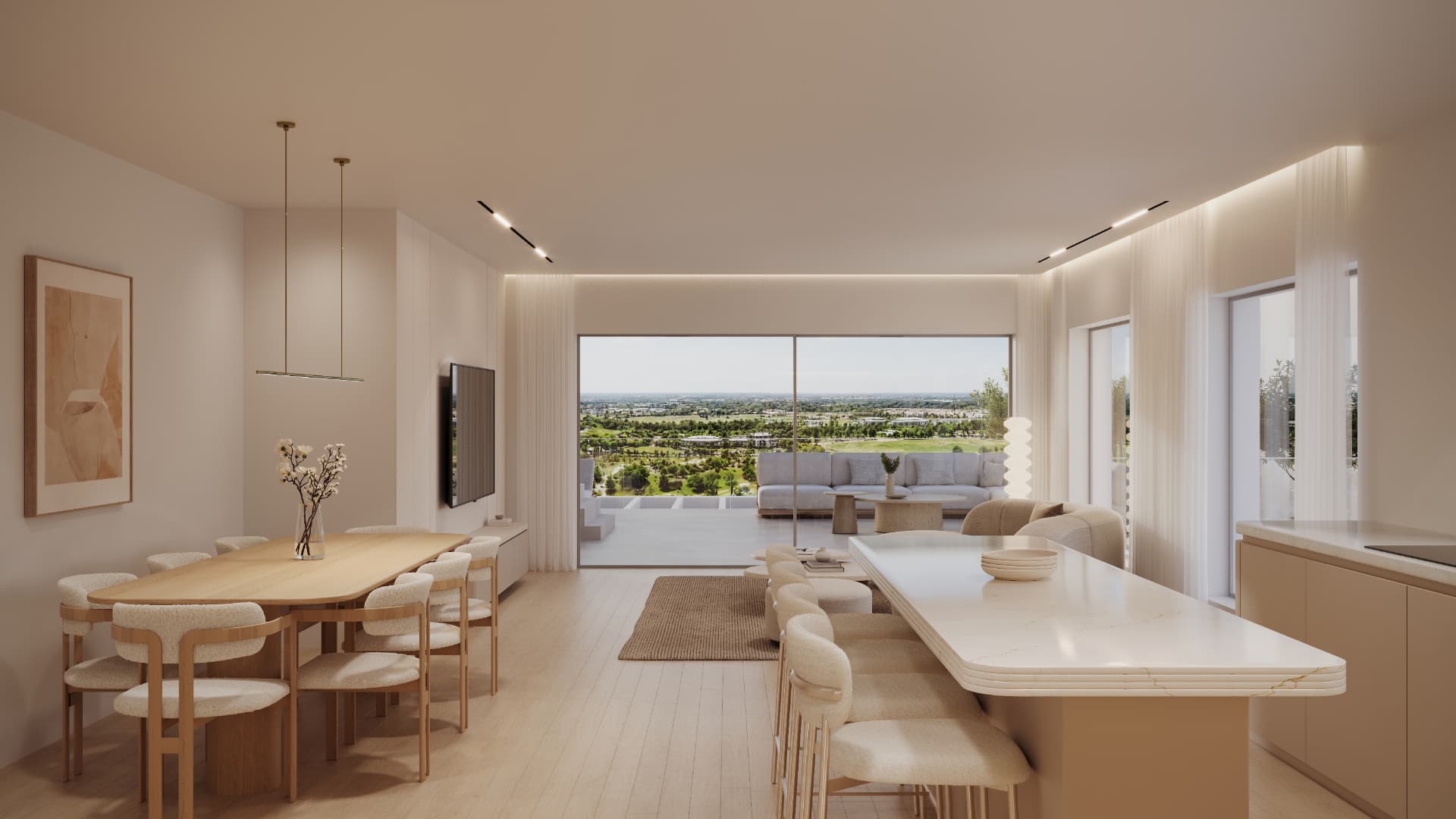
What are interior renders? Photorealistic images of the apartment from inside: living room, kitchen, bedrooms, bathrooms and balconies with furniture, lighting, textures and real finish materials from the spec. Good interior renders are produced at 4K and above with physically accurate lighting and eye-level camera angles. Their job is to drive the purchase decision — they answer 'what would it be like to live here'.
What are exterior renders? They show the building from the outside: facades, entrance, lobby, landscaping, parking and the surrounding neighbourhood. The exterior render is usually the project's first marketing asset — it appears on the construction sign, in the awareness campaign and on the brochure cover. Its job is positioning: 'where am I buying and what kind of project is this'.
When to use each: awareness stage — exterior renders including an aerial view showing proximity to parks, the sea or transport. Consideration stage — interior renders per apartment type showing finishes, natural light and proportions. Closing stage in the sales office — renders combined with a 360° or VR tour where the buyer moves through the space.
How many renders does a project need? A practical rule: one strong hero exterior (day and night versions), one aerial, and per main apartment type a living room and kitchen, plus a bedroom or balcony as needed. A typical residential project is well covered by 6 to 12 renders. A few strong images beat dozens of average ones.
How to recognise a good render: lighting first — a render that looks 'CGI' is almost always a lighting problem, not a resolution problem. Realism second — a real view through the window, correct proportions and materials that exist in the spec. Story third — a composition showing how the space is used sells better than one showing only the space.
Common mistakes: approving camera angles too late, ordering renders one at a time instead of planning a package, showing finishes that will not be delivered, and ignoring media-specific crops — a vertical social post, a wide campaign banner and a website hero are not the same composition.
From render to virtual tour: the same 3D model behind the interior and exterior renders can power a browser-based 360° tour and an interactive VR experience, so moving from stills to immersive does not require a new production.
INNOVISION VR produces interior renders, exterior renders, aerial views, 360° tours and interactive VR tours for developers, contractors, architects and real estate marketers in Israel.
Our services
- VR Tours for Real Estate
- Smart Project Websites
- Interior Renders for Real Estate
- Exterior Renders for Real Estate
- Architectural Visualization: Interior and Exterior Renders
- Virtual Tours for Real Estate Projects
- 360° Apartment Tour
- VR for Real Estate Developers
- Sales Office VR Experience
More articles
- Apartment and House Renders: How Architectural Visualization Sells a Property Before It Exists
- Architectural Visualisation for Developers and Contractors: Renders That Shorten the Sales Cycle
- The Future of Real Estate Sales Is Here: VR Solutions, Virtual Tours and Renders
- Virtual Apartment Tour: What It Is, How It Works and Why It's Changing Real Estate
* The content of this article is general information only and does not constitute a commitment, professional advice, or a binding offer. Results may vary between projects and clients. Nothing herein replaces individual professional advice. INNOVISION VR is not responsible for decisions made based on this content.